
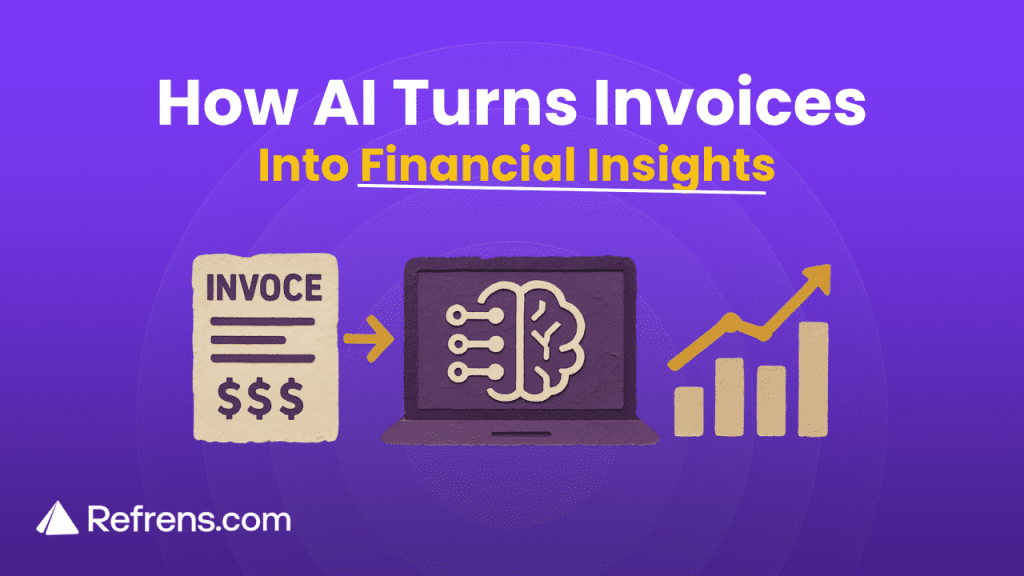
Finance teams are surrounded by invoice data, yet many still work with poor financial visibility. Invoices arrive through emails, supplier portals, PDFs, procurement tools, ERP screens, and payment systems, but the bigger story often remains buried. A number on an invoice may affect cash flow, supplier trust, tax exposure, working capital, and budget control at the same time. The challenge is not only processing the invoice faster. It is understanding what that invoice is telling the business before the impact reaches the balance sheet.
This is where AI data integration services create real value. They help finance teams connect invoice data with purchase orders, vendor records, contracts, tax rules, payment schedules, ERP balances, and treasury forecasts. Once these systems begin working together, invoice processing stops being a back-office activity and starts becoming a source of financial intelligence.
Why Faster Invoice Processing Is Not Enough
Traditional invoice workflows were built to capture, approve, and pay. That worked when invoice volumes were manageable and reporting cycles moved slowly. Today, finance teams need earlier signals. A delayed approval may hurt discount capture. A mismatch may point to contract leakage. A duplicate invoice may hide behind a slightly changed number. A new bank detail may indicate fraud risk.
AI invoice processing solves the first layer by reading invoice fields, extracting data, reducing manual entry, and improving accuracy. It can identify supplier names, invoice dates, tax details, line items, payment terms, and total amounts with far less manual effort. This is a major improvement for AP teams that still depend on email chains, spreadsheets, and repeated data entry.
But extraction alone does not confirm whether an invoice is valid, compliant, expected, duplicated, overpriced, or safe to pay. That judgment needs context from purchase orders, goods receipts, contracts, vendor records, tax rules, approval histories, and ERP balances. Without that context, finance may only know what the invoice says, not whether the business should act on it.
Connecting Invoices With Finance Context
The real value appears when invoice data is connected to the systems that explain it. An invoice for ₹10 lakh may look ordinary on its own. Once compared with the purchase order, vendor history, tax code, contract terms, approval route, and payment schedule, it becomes a financial signal.
For example, the invoice may reveal that a supplier charged more than the agreed contract rate. It may show that the goods were not fully received. It may expose that the same invoice was already submitted with a different format. It may also show that the payment falls close to a cash-heavy week when payroll, tax dues, and other supplier payments are already scheduled.
A mature setup should connect invoice information with:
● Purchase orders, goods receipts, and contract pricing.
● Vendor master records, tax IDs, and bank details.
● ERP ledgers, GL codes, and approval hierarchies.
● Payment terms, discount windows, and treasury forecasts.
● Compliance rules, audit trails, and exception history.
When these links are in place, AI invoice processing can move beyond data capture. It can flag a bank change, detect a duplicate with an altered number, identify price variance, or show which department keeps delaying approvals. More importantly, it gives finance teams the confidence to make decisions with better timing and stronger evidence.
From AP Automation to Financial Visibility
Touchless AP sounds attractive, but CFOs need more than a clean workflow. They need to know what cash is committed, which invoices are pending, which payments can wait, which suppliers need priority, and where liabilities are building up.
This is where connected invoice data becomes useful for cash planning. If a large invoice is waiting for approval while payroll, tax payments, and supplier discounts are approaching, AI can help finance compare cash trade-offs. The team can decide whether to release payment early for a discount, delay a flexible payment, or escalate a supplier invoice that may affect operations.
AI invoice processing also improves visibility into working capital. Finance teams can track days payable outstanding, open liabilities, approval delays, early payment opportunities, and vendor-level exposure with greater accuracy. Instead of waiting for month-end reports, leaders can see financial pressure while there is still time to respond.
Agentic AI is adding another layer to this shift. Instead of only flagging an exception, an AI agent can check tolerance rules, review supplier history, verify goods receipt, route the issue to procurement, and recommend whether to approve, hold, or escalate the invoice. Human oversight still matters for high-risk payments, but teams no longer need to chase every issue manually.
Fraud, Compliance, and Better Financial Control
Invoice risk often hides between systems. A standalone AP tool may catch a missing field, but it may not detect a suspicious bank account change unless vendor master data, payment records, and approval history are connected. A duplicate invoice may not look identical if the supplier changes the invoice number, adjusts formatting, or resubmits it through a different channel.
With integrated data, AI can identify unusual payments, inactive vendors, tax mismatches, and other anomalies. Before deploying these workflows at scale, organizations also need effective test data management to validate different financial scenarios without exposing sensitive information.
Compliance also becomes easier when invoice data is structured and connected. Tax rules, e-invoicing requirements, audit trails, approval logs, and payment records can be linked more clearly. This gives finance teams better documentation and reduces the pressure of manual checks during audits or reporting cycles.
What Businesses Must Fix Before Scaling AI
AI invoice processing works best when the finance data underneath it is clean. Duplicate vendor records, inconsistent GL codes, missing purchase orders, outdated payment terms, and unclear approval rules can weaken even advanced systems. AI cannot deliver strong financial visibility if the data foundation is unreliable.
Before scaling, businesses should review data quality, access rights, ERP sync, audit requirements, exception thresholds, and governance ownership. Finance leaders should also define which decisions can be automated, which need review, and which must always remain under human control.
Every payment decision should show what data was checked, what risk was found, what recommendation was made, and who approved it. This level of traceability is essential because finance teams do not only need speed. They need confidence.
Building Finance Teams That See Earlier
The future of invoice management is about helping finance teams see cash pressure, supplier risk, compliance gaps, and payment exposure earlier. When invoice data becomes connected intelligence, AP moves from routine processing to strategic decision support.
Businesses that connect invoice data across ERP, procurement, vendor management, treasury, and compliance systems can move from reactive reporting to proactive financial planning. They gain a clearer view of liabilities, stronger control over cash flow, and better insight into the financial signals hidden inside everyday invoices, especially when supported by artificial intelligence development services.
Related Posts:
 Top 15 Vendor Management Software in India for 2026: Features, Pricing, Ratings & Reviews
 Vendor Approval Process: Prequalification, Vetting, Due Diligence & Risk Checks
 Vendor Onboarding Process: Steps, Checklist & Documents
 A Complete Guide to the Types of Invoices
 Everything You Need to Know About Purchase Orders: A Complete Guide
 How Data and Financial Visibility Drive Better Business Decisions
 10 Best Invoice Approval Workflow Software
 Best Supplier Invoice Software
 GSTR 2A: How It Works and Why It Matters
 Everything To Know About GSTR 3
 Mastering Input Tax Credit (ITC) Under GST: A Comprehensive Guide for Businesses in India
 Zatca Compliant E-Invoices: A Detailed Guide for Businesses in Saudi Arabia
 Your Complete Guide to GSTR 3B: Filing Process, Due Dates, Penalties, and FAQs
 The Ultimate Guide to Basics of Inventory Management
 Understanding Reverse Charge Mechanism (RCM) Under GST: A Complete Guide for Businesses
 Best Invoice OCR Software in India: Top 5 Tools Compared
 Top AI accounting Software in India
 Boost Sales with CRM & ERP Integration: 10 Powerful Benefits